
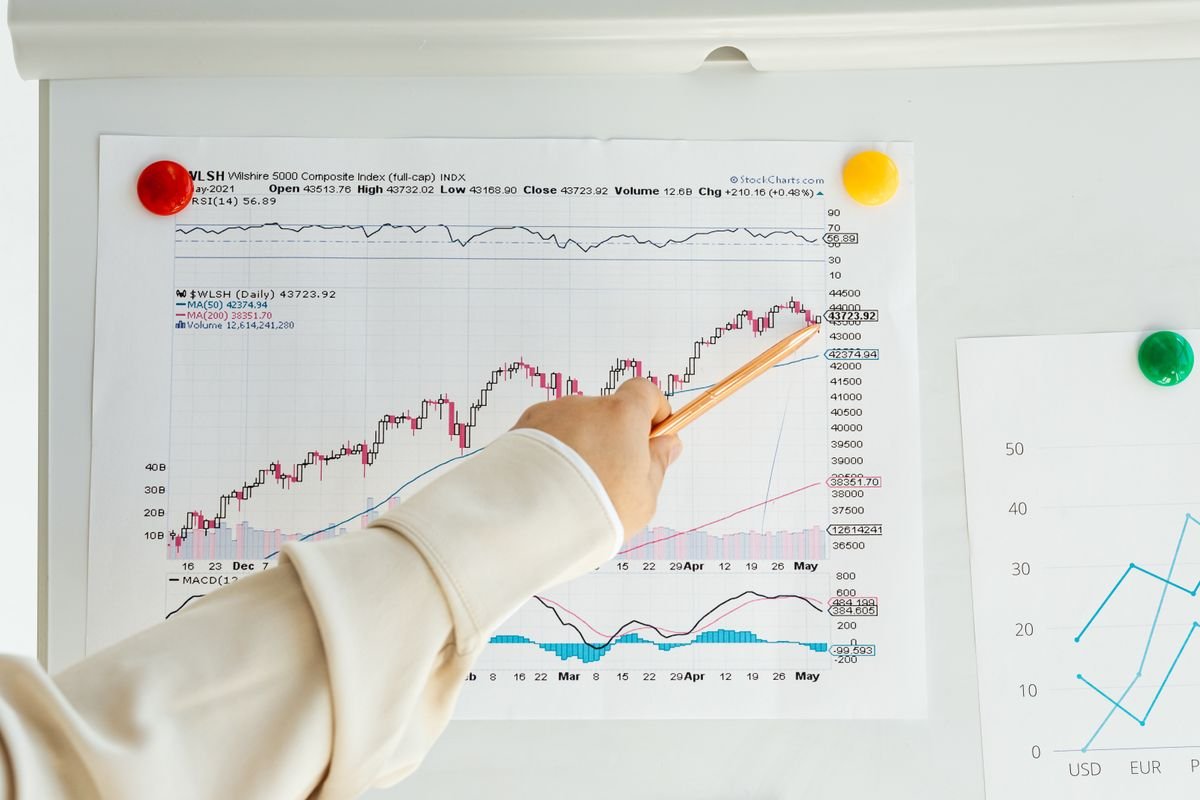

Donchian Combo Trend Strategy Explained
The Donchian Combo Trend Strategy is listed on Scalprbot as a members-only trend strategy, alongside the Sir Noman Method, the video lectures, and the PDF notes. The full rules for this particular combination are taught inside the course, not on the public pages of the site, so this article explains the general idea behind it, how trend strategies work, and what a trader should check before using one. It does not invent the exact rules of the Scalprbot version. For those, members should follow the lectures and notes.
What Is a Donchian Channel?
The Donchian channel is one of the oldest trend-following tools in trading. It is named after Richard Donchian, and it is very simple. Over a chosen number of periods, it plots the highest high and the lowest low. The top line is the highest price in that period. The bottom line is the lowest price. The middle line is often the average of the two.
When price breaks above the top line, that can suggest the start of an uptrend, because price has gone higher than it has been for the whole lookback period. When price breaks below the bottom line, that can suggest a downtrend. The idea is not to predict the top or the bottom. It is to follow the trend once it has started, and to exit when the trend changes.
The word "combo" in the strategy name suggests that the Donchian idea is combined with other tools or conditions, rather than used on its own. That is common in trend trading. A breakout alone can be a false signal, especially in a sideways market, so traders often add a second check, such as a trend filter, a momentum reading, or a volume check, before they act.
How Trend Strategies Work in General
A trend strategy has three parts: how to spot the trend, how to enter, and how to exit. Spotting the trend usually means looking at price structure. In an uptrend, price makes higher highs and higher lows. In a downtrend, it makes lower highs and lower lows. A Donchian breakout is one way to spot that a new trend may be starting.
Entering usually means waiting for confirmation, not jumping in on the first sign. For example, a trader might wait for a candle to close above the channel, rather than acting while the candle is still forming. They might also check a larger timeframe, to make sure the bigger trend agrees with the smaller one. That is the same principle used in the Sir Noman Method, where the V1 Method checks the trend on both the 1-day and 1-hour charts.
Exiting is just as important as entering. Trend traders often use a trailing stop, which moves up as price rises, or they exit when price breaks back inside the channel. The exact exit rule matters, because trends do not last forever, and a trader who stays too long can give back most of the gain.
Why Trend Strategies Fail Sometimes
Trend strategies work best when the market is actually trending. They struggle when the market is moving sideways, because price keeps breaking out and then falling back, triggering many small losses. This is sometimes called whipsaw. A trader who uses a trend strategy in a sideways market will often feel that the strategy is broken, when in fact the market conditions are wrong for it.
Another problem is entering too late. By the time a trend is obvious to everyone, much of the move may already have happened. That is why trend traders accept that they will miss the very start of a move. They are trying to catch the middle part, where the trend is confirmed but still has room to run. They also accept that some trades will lose money. No trend strategy wins every time.
What to Check Before Trading a Trend Strategy
Before you trade any trend strategy, including the Donchian Combo, check four things. First, what is the trend on the larger timeframe? If the daily chart is falling, a short-term uptrend on the hourly chart may be a bounce, not a new trend. Second, is there a clear breakout, or is price just drifting near the line? Third, what is the volume doing? A breakout with rising volume is usually stronger than one with falling volume. Fourth, where is your stop loss, and how much are you risking? A trend trade without a stop loss is not a plan.
You should also check the coin itself. Is it a coin with real trading volume, or a thin coin where a small order can move the price sharply? Is there news that could change the trend suddenly? A trend strategy works best on coins with enough liquidity that price moves are meaningful, not random.
Risk Disclaimer
Crypto trading is risky. This article is for education only and is not financial advice. You can lose money. Do your own research.