

How Volume and Liquidity Affect the Market
Volume and liquidity are two ideas that every trader should understand, because they explain why some price moves are strong and others are weak. Volume is how much of a coin was traded in a period. Liquidity is how easy it is to buy or sell without moving the price much. Together, they tell you whether a price move is supported by real trading activity, or whether it is happening on very little trading and may reverse quickly.
What Is Volume?
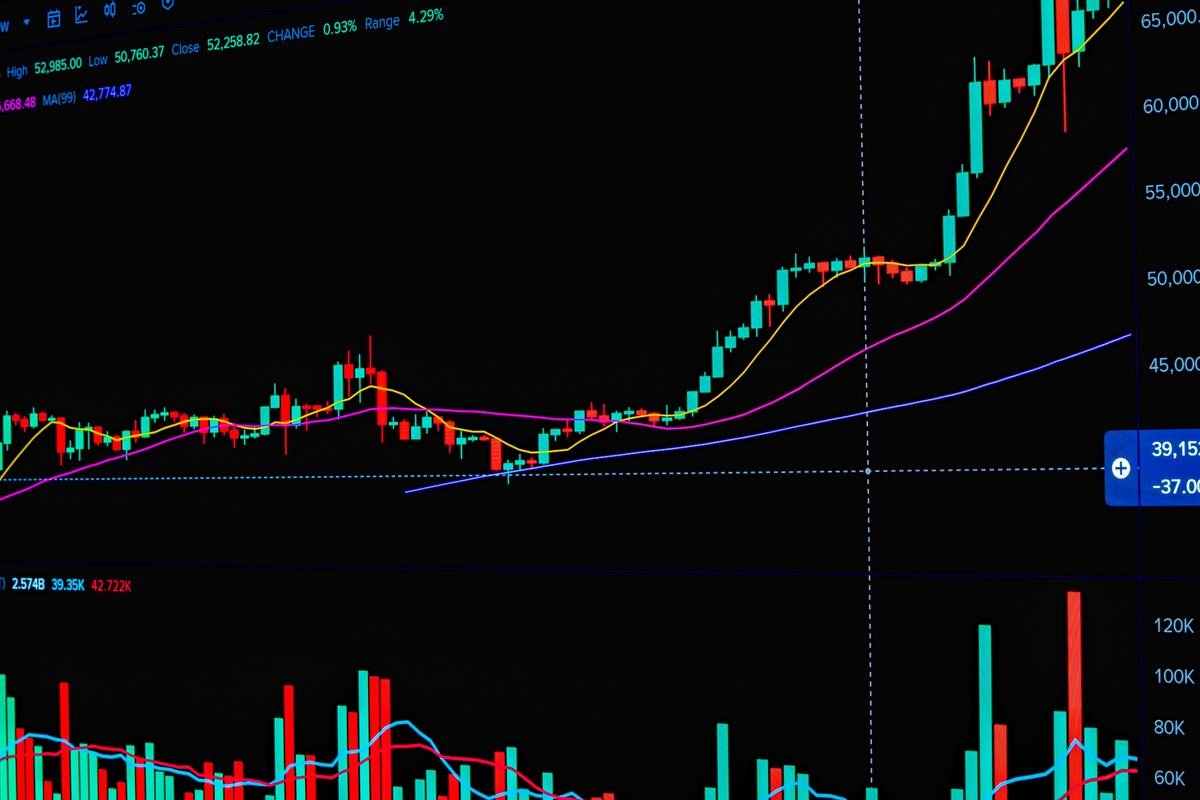
Volume is shown at the bottom of most charts, as a series of bars. Each bar shows how much was traded during that candle. When volume is high, many traders are active. When volume is low, few traders are active. A price rise with high volume suggests many buyers agreed with the move. A price rise with low volume suggests few buyers were involved, and the move may be weak.
Volume is especially useful when price breaks a level. A breakout above resistance with high volume is usually stronger than a breakout with low volume. A fall below support with high volume is usually stronger than a fall with low volume. That does not guarantee the move will continue, but it gives you one more piece of evidence to consider alongside trend, support, and RSI.
Volume can also warn you when a trend is weakening. If price is rising but volume is falling, fewer traders are supporting the rise, and the trend may be losing strength. If price is falling but volume is falling too, selling may be slowing down. These are not signals on their own, but they are useful clues.
What Is Liquidity?
Liquidity is closely related to volume, but it is not the same thing. A coin can have high volume on one day and low volume the next. Liquidity is about how easy it is to trade at a fair price at any given moment. A liquid coin, such as Bitcoin, has many buyers and sellers, so you can buy or sell a reasonable amount without moving the price much. An illiquid coin has few buyers and sellers, so even a small order can move the price sharply, and it can be hard to sell when you want to exit.
That is why traders prefer liquid coins, especially beginners. A liquid coin is easier to enter and exit, the price is less likely to jump suddenly because of one order, and the chart is more likely to behave in a way that technical analysis can help with. An illiquid coin can look good on a chart, but it can be very hard to trade in practice.
Liquidity also has a second meaning, used in the Sir Noman Method, where it refers to pools of stop and liquidation orders. Tools such as Coinglass show where those pools are, and the course teaches that price is often drawn towards large pools. That idea is covered in more detail in the article on liquidity and market structure, and in the article on the Liquidity Checker.
How Volume and Liquidity Work Together
Imagine two coins that both rise 10 percent in a day. The first coin has high volume and high liquidity. Many traders bought it, the price move was supported by real activity, and you could have bought or sold easily. The second coin has low volume and low liquidity. Only a few traders bought it, the price move was driven by a small number of orders, and it might be hard to sell without pushing the price down. The first move is more trustworthy than the second, even though the percentage change is the same.
That is why you should always check volume before you trade. If a coin is on a gainers list but its volume is very low, be careful. If a coin is breaking out but volume is falling, be careful. And if a coin has almost no trading volume at all, consider skipping it, no matter how good the chart looks.
Common Mistakes
A common mistake is ignoring volume entirely and only looking at price. A price chart without volume is only half the story. Another mistake is trading illiquid coins because they look cheap. A coin that costs a fraction of a cent can still lose most of its value, and it can be hard to sell when you want to exit. A third mistake is assuming that high volume always means a good trade. High volume can also mean many traders are selling, not buying. Always check whether volume is rising on up moves or on down moves, and in which direction the price is actually going.
A Simple Check Before Every Trade
Before you trade, check three things about volume and liquidity. First, is the coin's daily volume high enough that you can buy and sell easily? Second, is volume rising or falling on the current move? Third, is the move supported by volume, or is it happening on very little trading? If you cannot answer those questions, you do not have enough information to trade yet. Take the time to check, and you will avoid many low-quality trades.
Risk Disclaimer
Crypto trading is risky. This article is for education only and is not financial advice. You can lose money. Do your own research.